Tsarskoe Selo
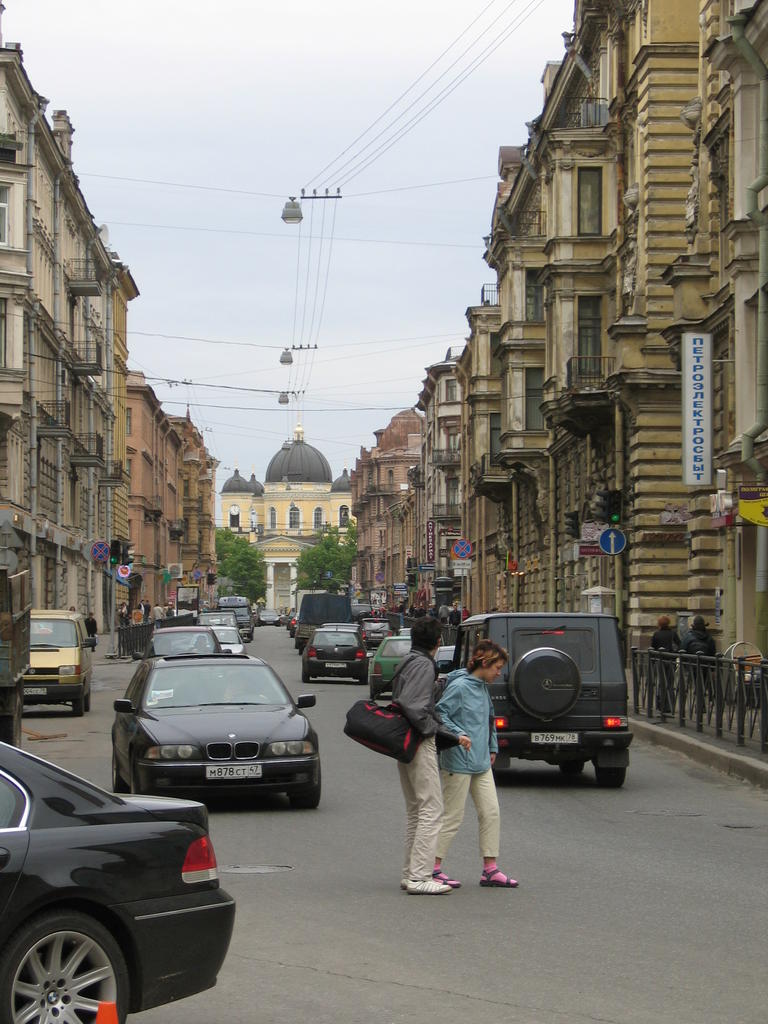
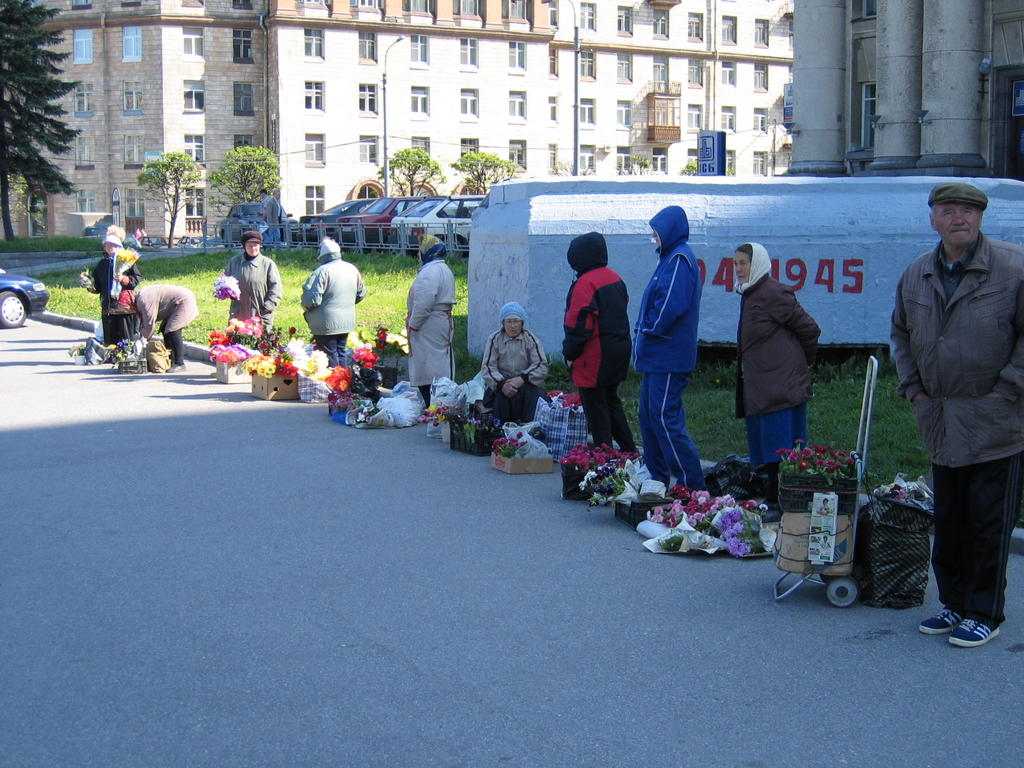 Thursday morning we woke up, had breakfast at the hotel and then met Luda at 10 a.m. She had learned her lesson and told us to stop at a store for some snacks so we wouldn’t have to stop and eat. I bought the best yogurt I had there (vanilla pear) in a little store in the metro and also bought some popcorn from a vending machine that popped it while I waited. We rode the metro to the edge of the city and then we took a "bus taxi" to Pushkin, a city about an hour SE of Saint Petersburg. (This first picture shows babushkas selling their flowers outside of the metro. One of the sad things about the country is that older people are not taken care of and most must earn their own income or beg).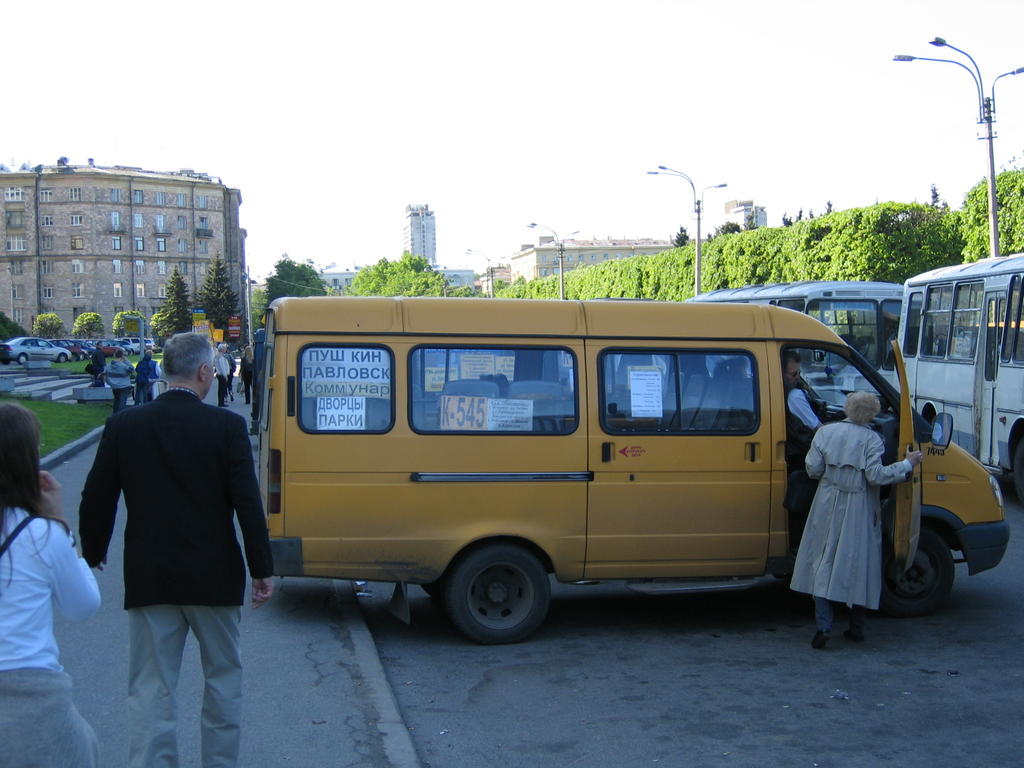
A bus taxi is a sort of minivan that holds about 13 people and travels along a preselected route. It’s faster than a bus because once it’s full it doesn’t stop, but it’s cheaper than a regular taxi. This was one of our what we called "Russian experiences--" traveling as the locals, crammed in this taxi with no air conditioning. (It wasn’t too hot, but a few people hadn’t showered either). This was definitely something we couldn’t have done without Luda as even if you spoke Russian it would be really easy to get on the wrong taxi and a little farther away from Saint Petersburg and a little closer to Siberia than you wanted to be.
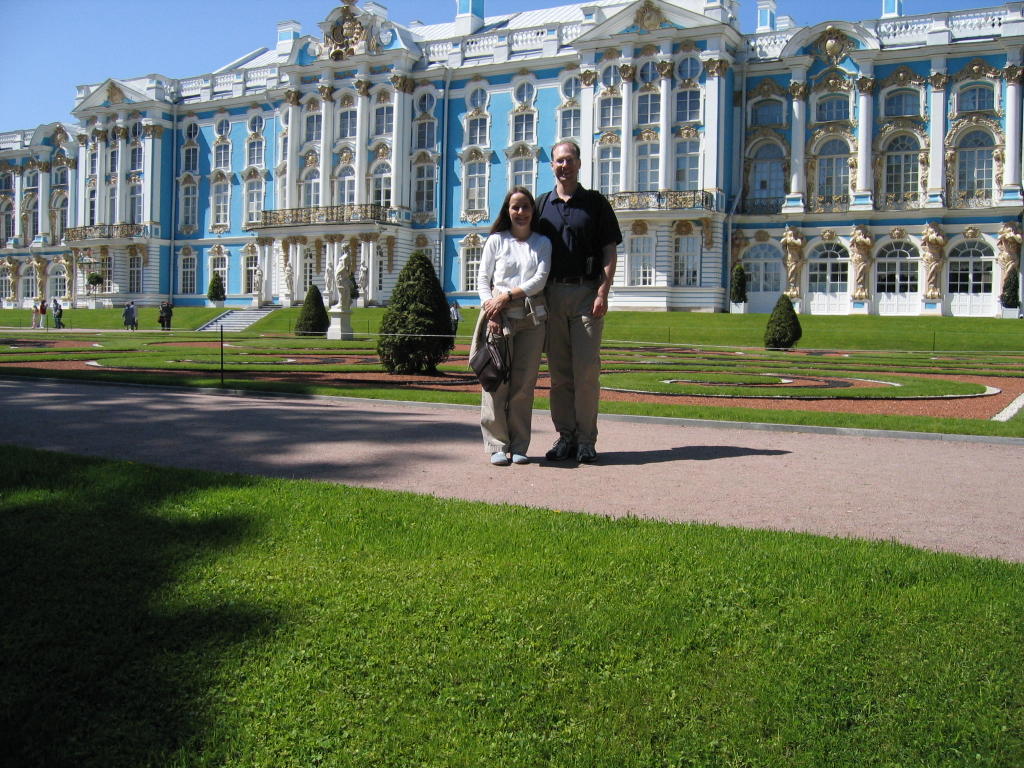
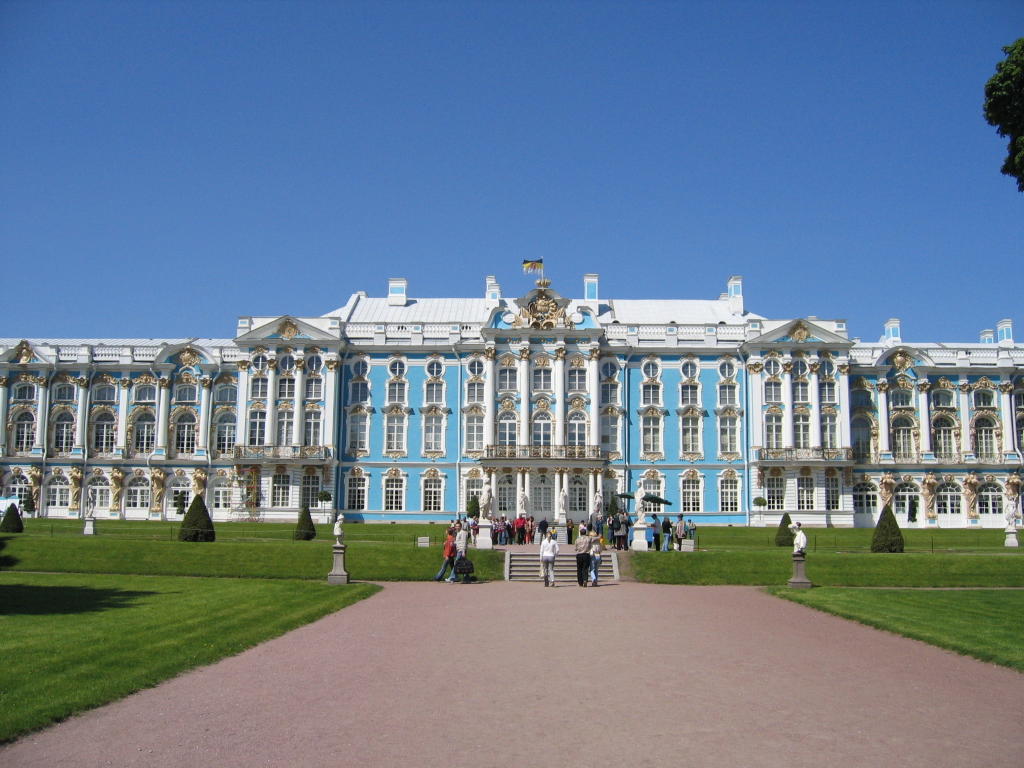
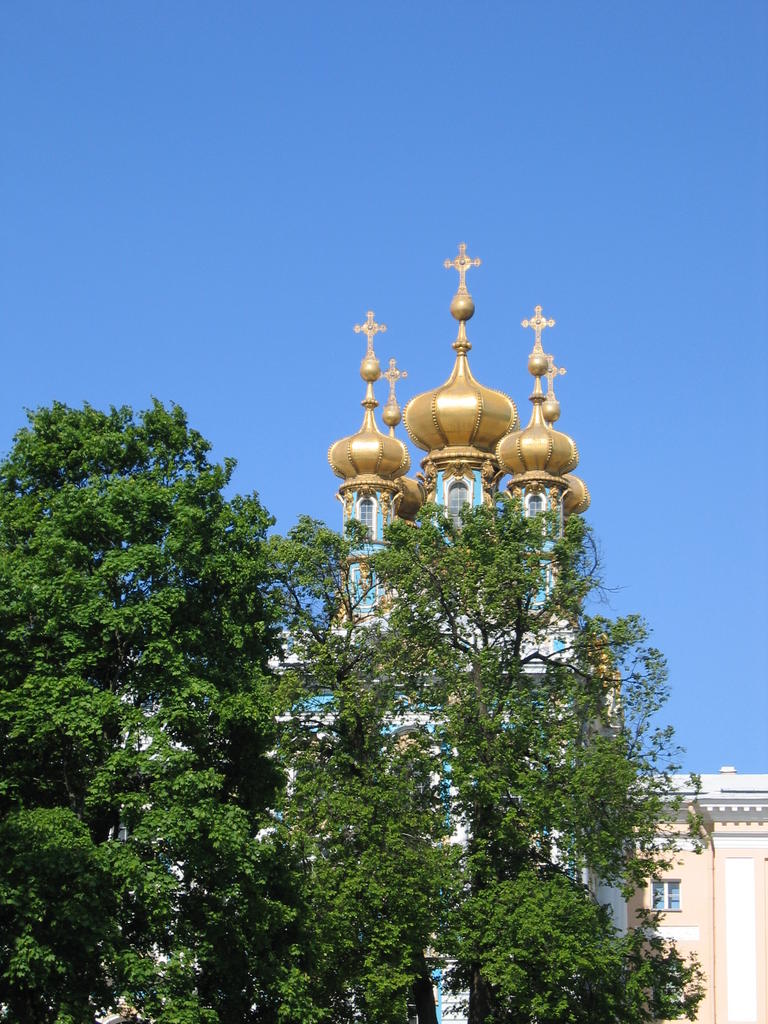 Pushkin is where Tsarskoe Selo, or the Summer Palace of the Tsars, is located. It was built by Catherine the Great and is the Russian equivalent of Versailles. We got there and I saw a sign that said individual visitors were allowed through the palace only after 4:00 p.m. It’s a good thing Luda can’t read English. She went and bought us tickets and then took us to the front of a very crowded room where people were waiting to go through a door and go on a tour (just Brad and I were going on the tour). She said something to a couple of people in charge and then opened the door and pushed us in and gestured to us to go with a group of people up on the stairs. Well, this plan was fine except for no one told the group of the people on the stairs. When we tried to join their tour we were immediately told, "This is a private tour." We decided that was fine and we would just walk through ourselves. We walked into the big hall. I have to admit that palaces like these tire me. All I can think of is what a waste of money they are and how they symbolize the power of the ruling class who lived lavishly while their subjects suffered. Visiting these g
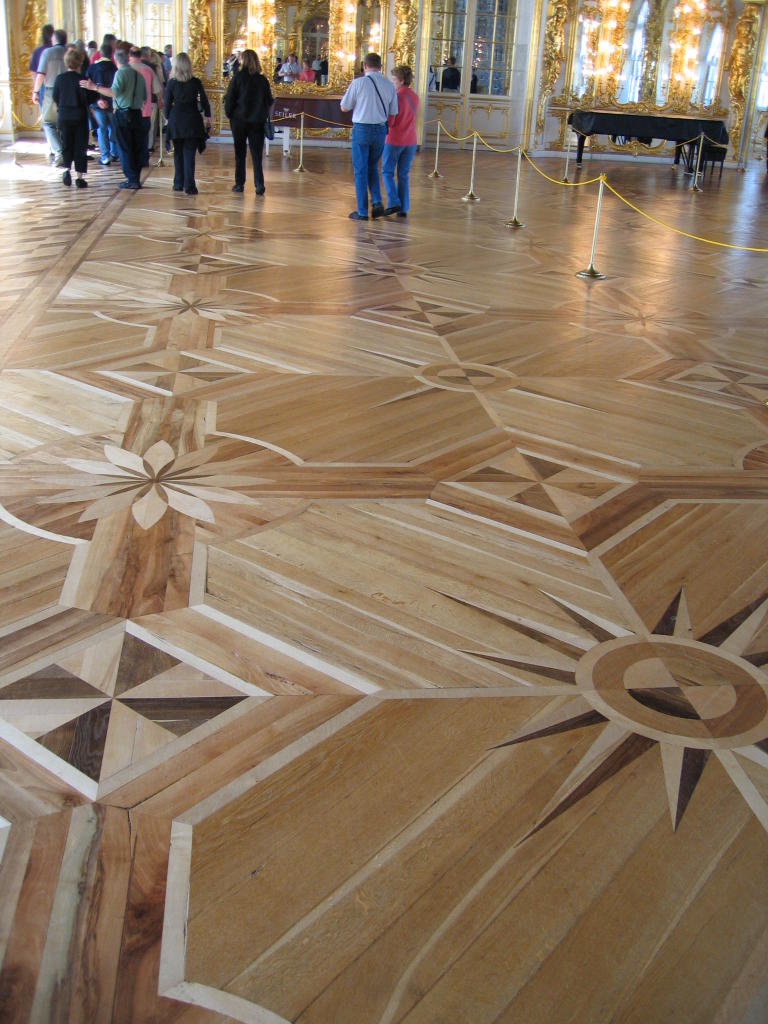 rand palaces just reinforces my thankfulness for the principles America was founded on--freedom, hard work, moral values and personal property ownership. Having said this, when I walked into the room I found something truly delightful.
 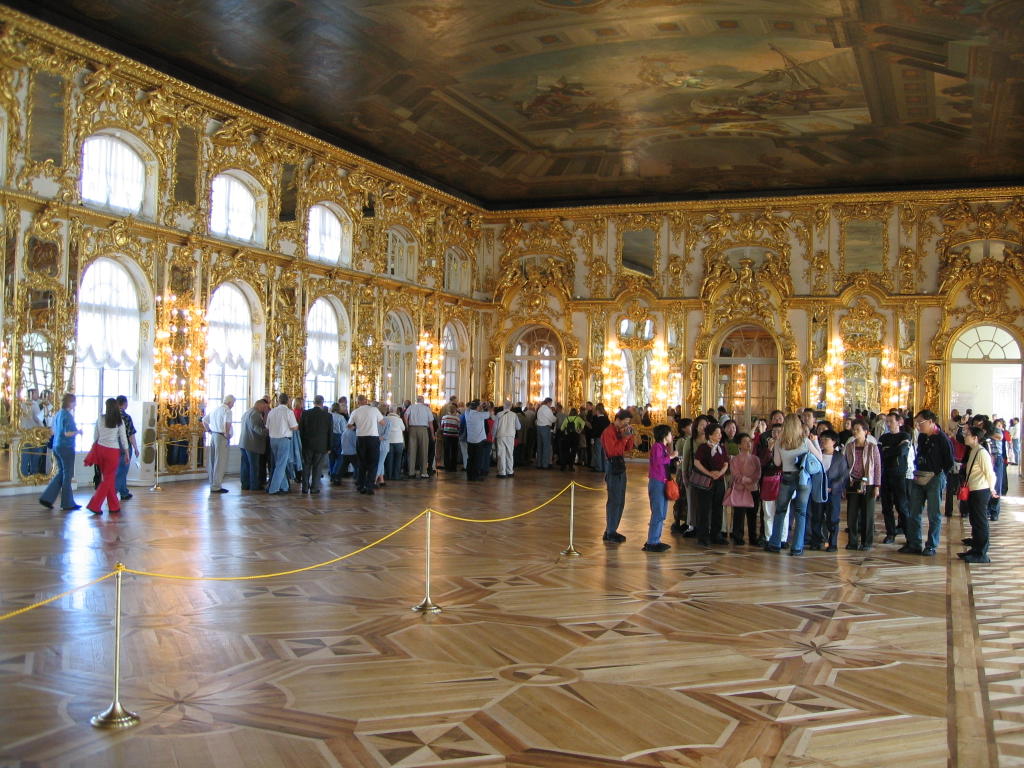 The gold trim and mirrors and painted ceilings, although extravagant and costly do not seem truly beautiful to me, but I loved the hardwood floors. (This trip definitely upped the ante for future flooring in our home).
 When the palace was first built, all the wood for the floors was its original color, nothing was stained. Every shade was just a different type of rare wood. (I’m not sure what happened to the floors during the war as parts of the palace were destroyed, I think some of the flooring is still original, but I think some was restored). Brad and I started walking around the big room, but we soon discovered that to get into the next room you have to be with a tour group. There were older ladies sitting in-between each room and they would let one group in at a time. We snuck in by tagging along at the end of a group for a few rooms, but at one room the lady thought too many people were going in. "Same group? Same group?" she excitedly asked while trying to keep people back. The tourist in front of us looked at us and said, "No," (as in they’re not part of our group). By now we were thoroughly versed in the Russian way of getting places and quickly responded, "Yes! Yes!" and walked into the room.
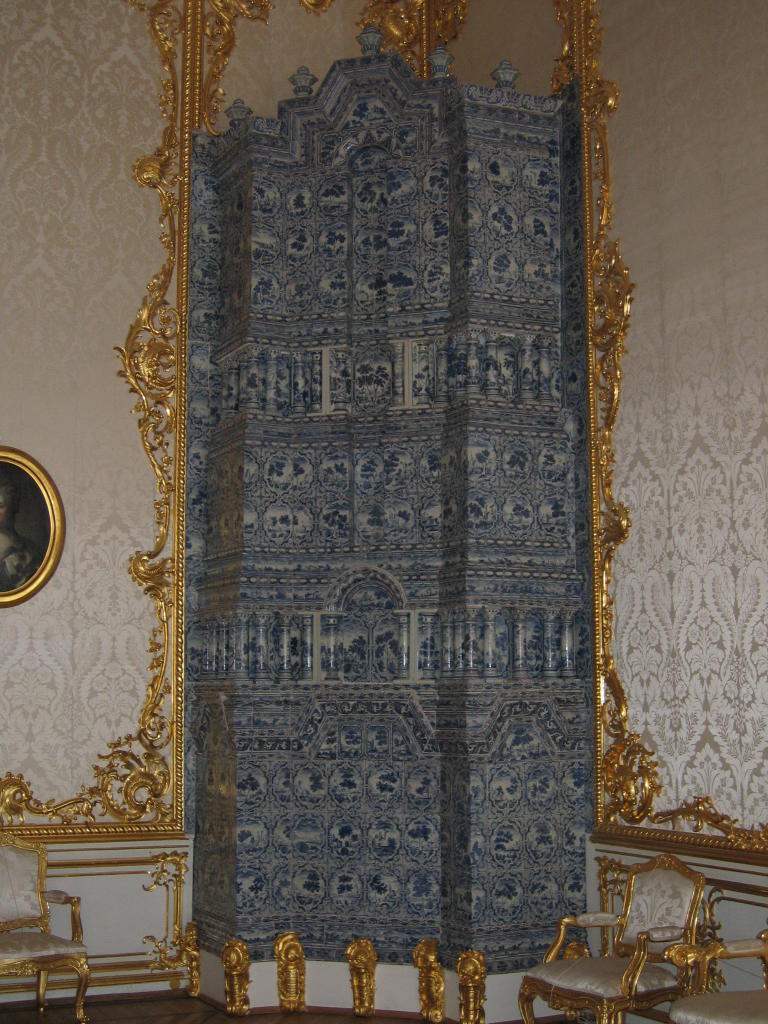
Besides the amazing floors each room has porcelain heaters/stoves made from Chinese porcelain. Most rooms were decorated in a neoclassical style. During WWII the Axis troops weren’t expected to get to Pushkin, but when they started getting close all the artwork, furniture and artifacts (like the original table and chairs and dishes used by Catherine the Great) were packaged in crates and sent by train to Vladivostock (on the eastern edge of Russia). There is one room made of a precious green stone found only in Russia and another room made all of amber. When they tried to remove the amber it crumbled, so they sandbagged it and built extra walls all around the sandbags. This room was still destroyed in
 the war, but has been restored to look exactly as before. Well the Axis troops did arrive and the castle was bombed and caught on fire. It wasn’t totally destroyed but probably about half the infrastructure was destroyed and almost all the interior was ruined.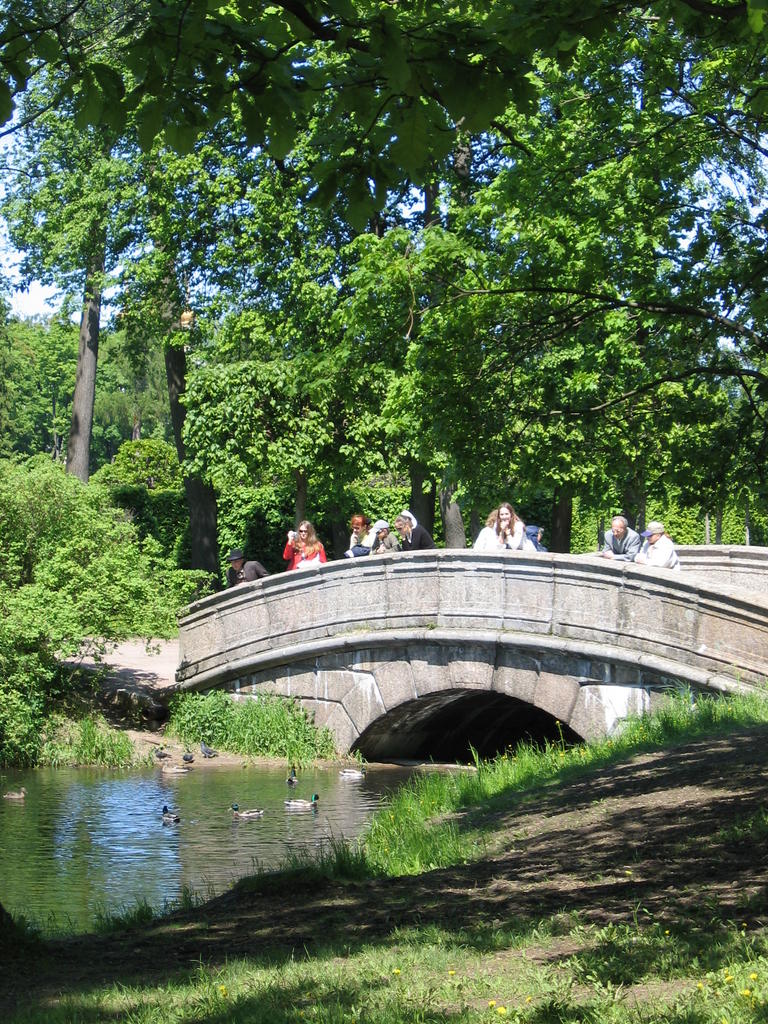
What is most amazing to me about all of this is that when the war was over the people returned and almost immediately set about organizing for its restoration. Millions of dollars was spent restoring this palace when the people were suffering from the impact of the war. As we left the palace there was an exhibit documenting the restoration process. So many people gave time and money to restore
 the palace. The czars, despite all their cruelty and brutality mean so much to the Russian people. They are proud of them and the legacy they left of beautiful palaces, art and buildings. It made me ask, "What is the legacy our country’s early leaders have left us?" I decided they have given us a legacy of character--sacrifice, discipline, hard work, serving God and man. In addition they have given us the principles our country is founded on--that all men are equal and can have equal opportunity.
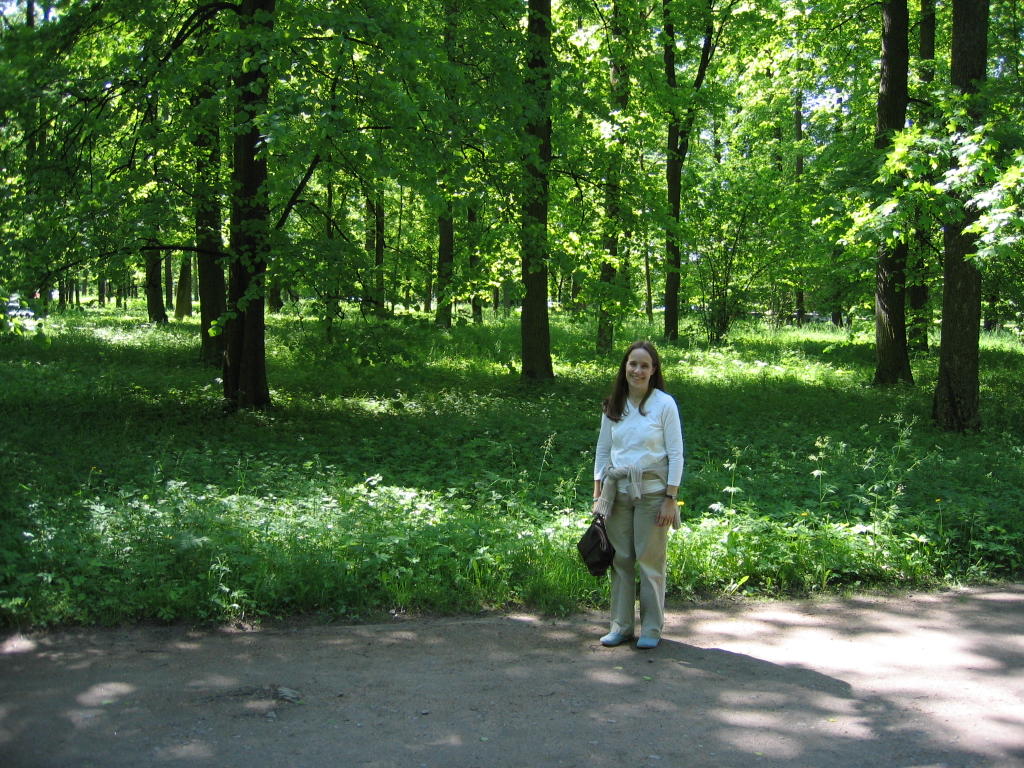
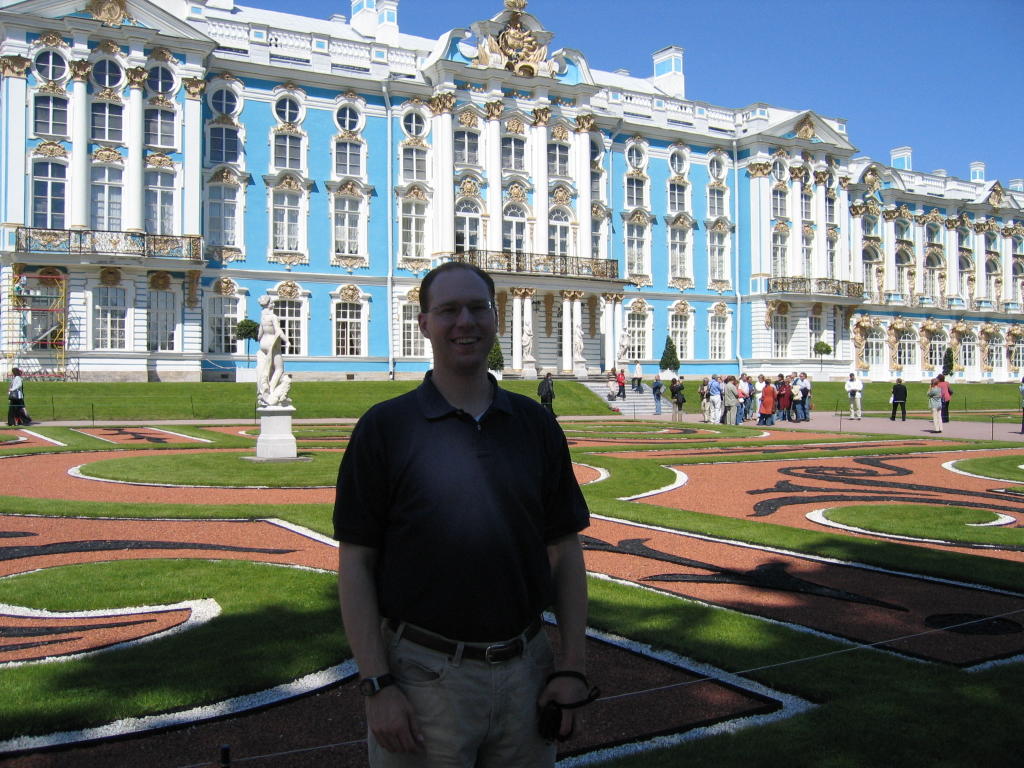 We left the palace and met Dad and Luda outside. Dad encouraged us to go and walk around the grounds. Luda didn’t think we had time, but we went anyway. This was one of my favorite places in Russia (the grounds--the ante has been upped for landscaping now, too--I want at least one lake:)). Tsarskoe Selo is surrounded by hundreds of acres of woods, formal gardens, paths and meadows. There is a large lake, and several other smaller castles, churches and buildings. We walked around for a short hour, and the left. We took a taxi back to the metro
  where we caught a bus for Peterhof.
posted by Laurissa at 4:40 PM
3 comments