Mikhailovsky Castle
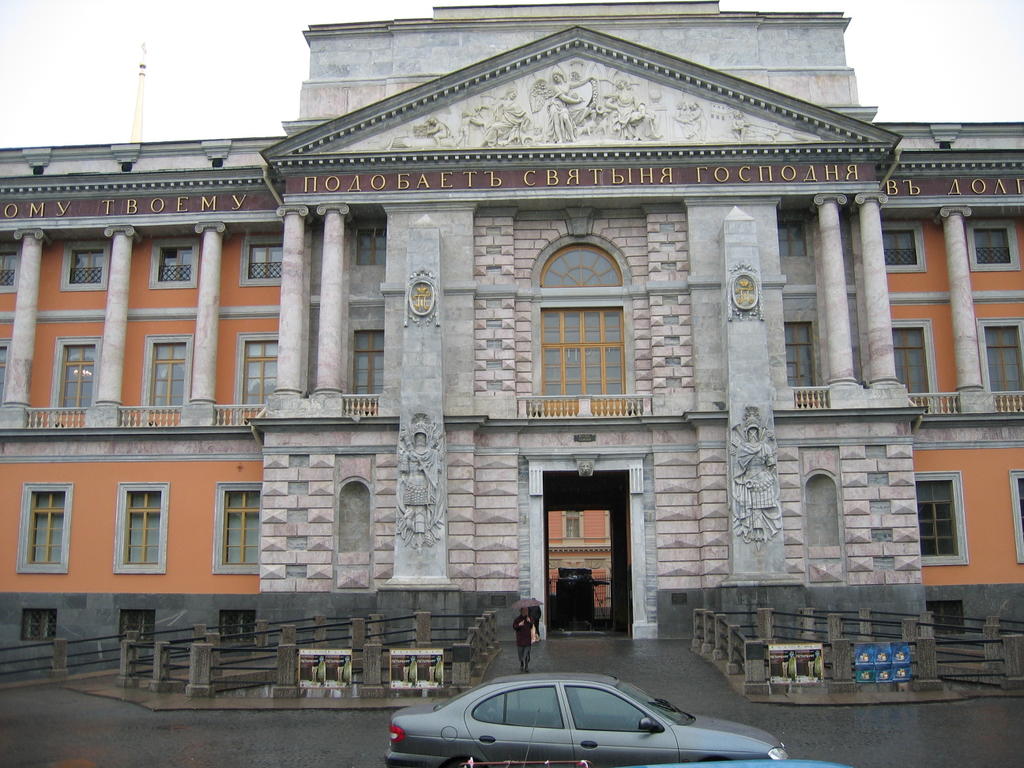
After we left the Summer Gardens we walked to the Russian Museum, looking at a few more sights along the way. We stopped at the Mikahilovsky Castle. It was built by the Emperor Paul, the son of Catherine the Great (incidentally she hated him). Paul was obsessed that people were always trying to overthrow him and didn’t feel safe in the Winter Palace. This castle was his answer. He had three to six thousand laborers working on it 24 hours a day during all seasons and it was completed in 3 1/2 years (pretty good for 1797, but the fast pace meant shoddy workm
 anship and the castle was impossible to heat, summer or winter). Unfortunately Paul made the mistake of humiliating the military. He was infatuated with Prussian uniforms and made the switch (his Field Marshall retorted: "Russians always beat the Prussians, so what are these changes for?"). The huge tricornered hats were uncomfortable and didn’t stay on. The soldiers had to spend all day preparing for military reviews, powder their hair with flour and sleep sitting up. Sometimes rats would try to eat the flour. Paul also regimented street traffic and lighting to accommodate his sleeping pattern (lights out by 8 p.m., no traffic by 9 p.m.). Thus, 41 days after he moved into the c
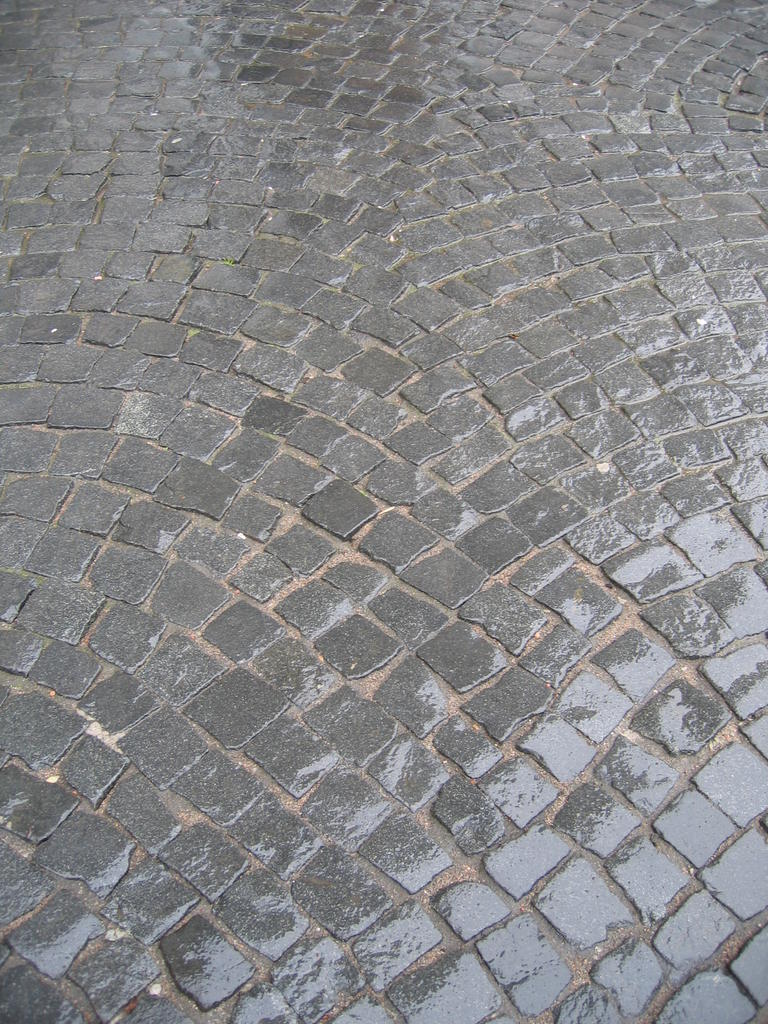
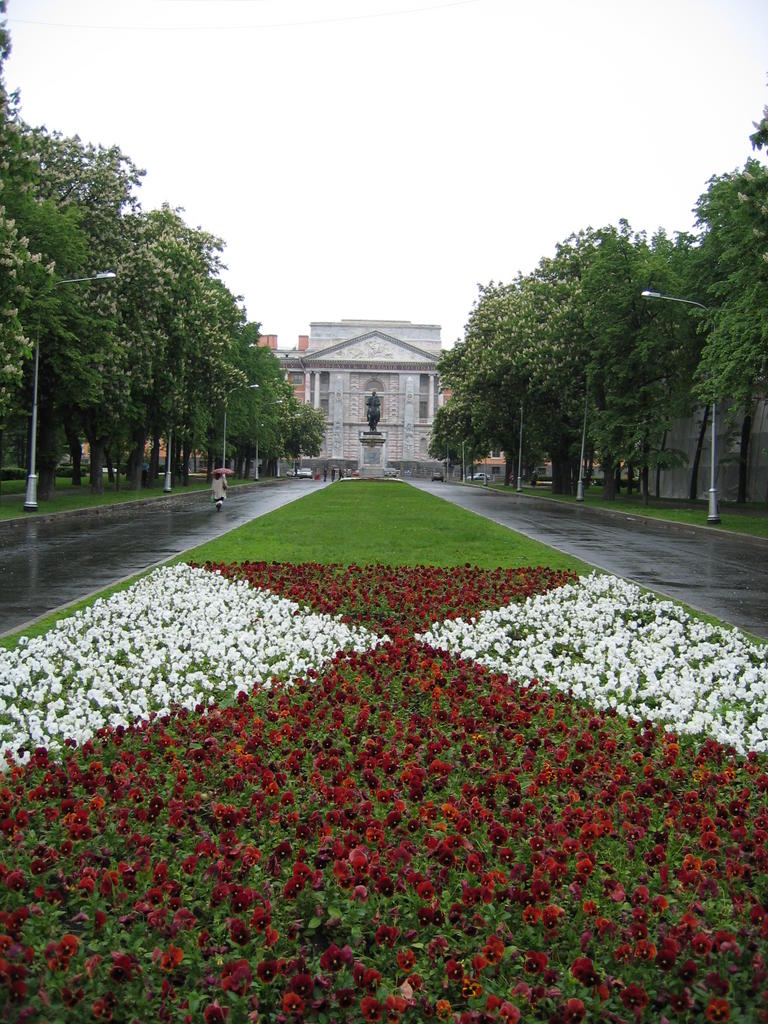 astle his own guards accosted and murdered him. (I refreshed my memory with the help of our guidebook, Russia Walks, less you think I remembered all these details. All quotes throughout are also from the book). The cobblestones are just outside the castle, but representative of those found in spots throughout the city. Notice the lovely vista to the castle (the picture with the flowers in front). This is another example of deliberately planning a street to end with the castle.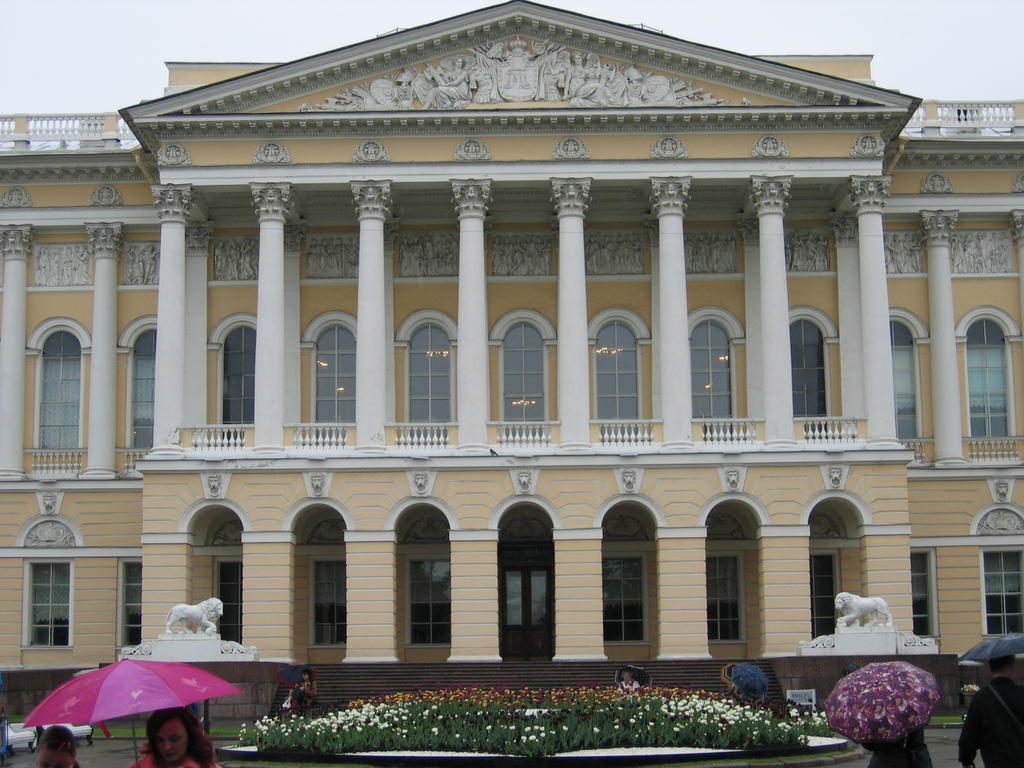
We ended up at the Russian Museum where Luda left us and we all traipsed through the Museum. This showcases Russian artists, from the earliest iconographic art to romantic periods. As they were all out of English audio tours and our Russian was still a bit rusty (still is) our enjoyment of the museum was purely visual. We were quite worn out, suffering from jet lag, and Brad and Dad had a little nap when they found a bench. There were some extraordinary oil paintings depicting biblical scenes (usually the bloody ones). They were about 20 x 15 feet. What is really interesting is that there was even this much art done in "realistic" styles, as the Russian Orthodox church strongly opposed realism. When Russian artists first star
 ted to
  follow the traditions of the Renaissance they were quickly told to keep to iconographic painting (told is probably a nice way of putting it).
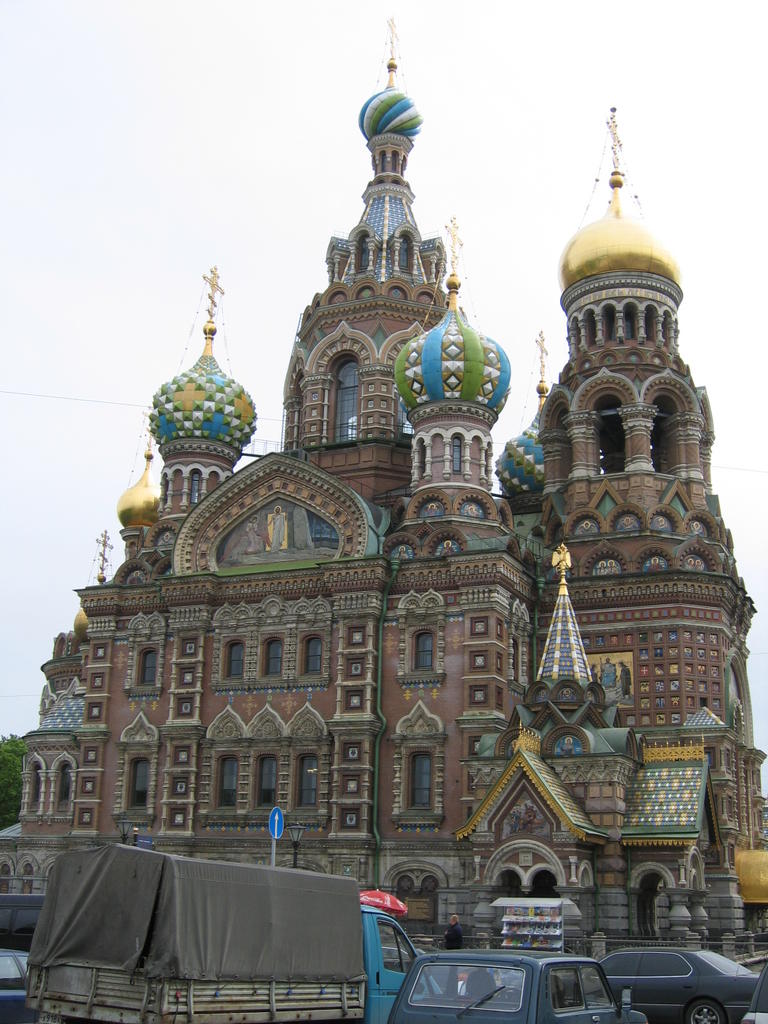
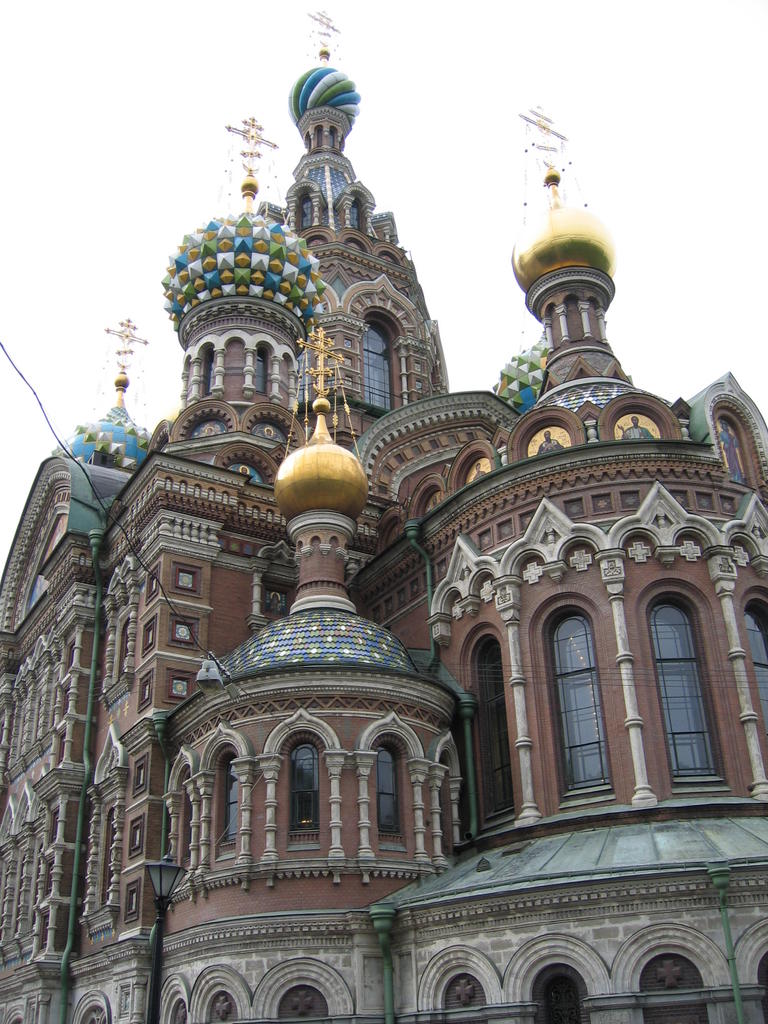
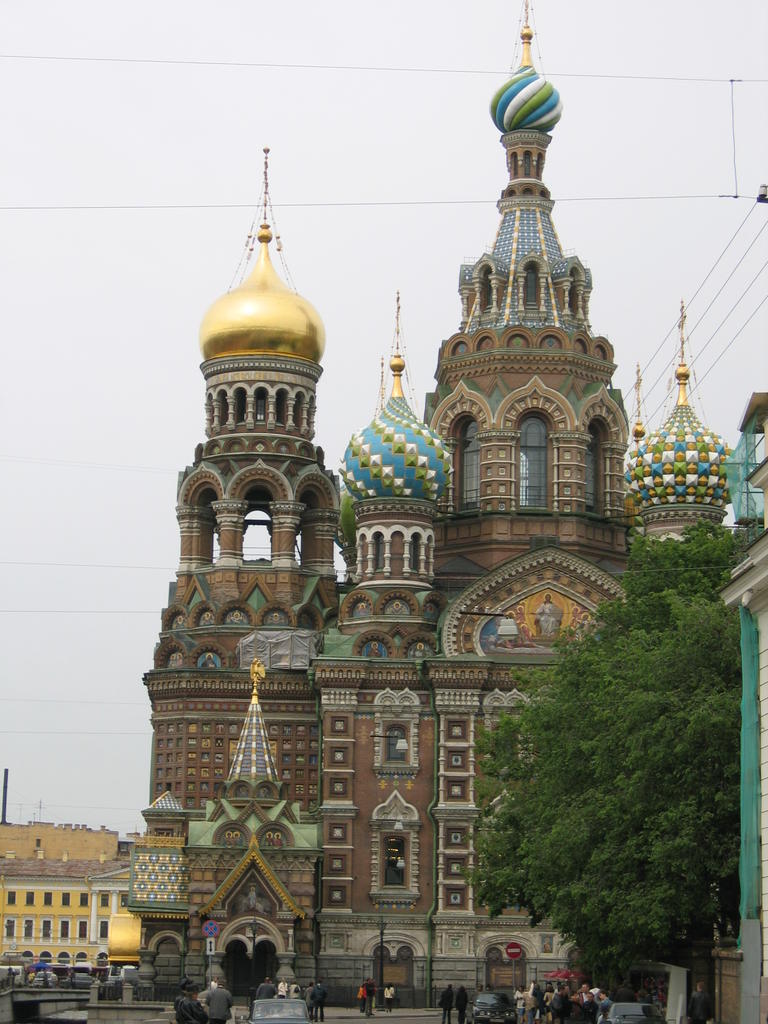
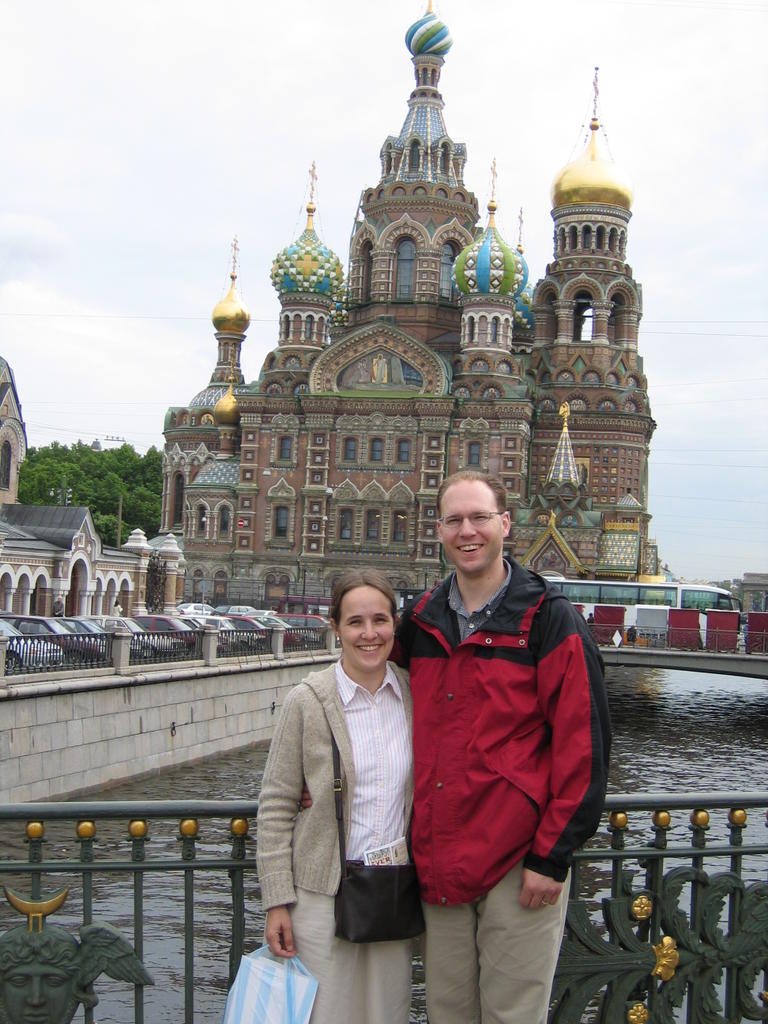
After we finished at the museum we walked around to look at the Church of the Savior of the Blood (built from 1883-1907). It was built on the spot where Alexander II was mortally wounded from a terrorist bomb in 1881. The Bolshevik’s had their say, though when they named the bridge just behind the church for Ignacy Hyrniewicky, Alexander’s murderer. This church was built as "an ethnographic and art historical game." The artists and architects "mined the Russian past," studying folk woodcarving and m
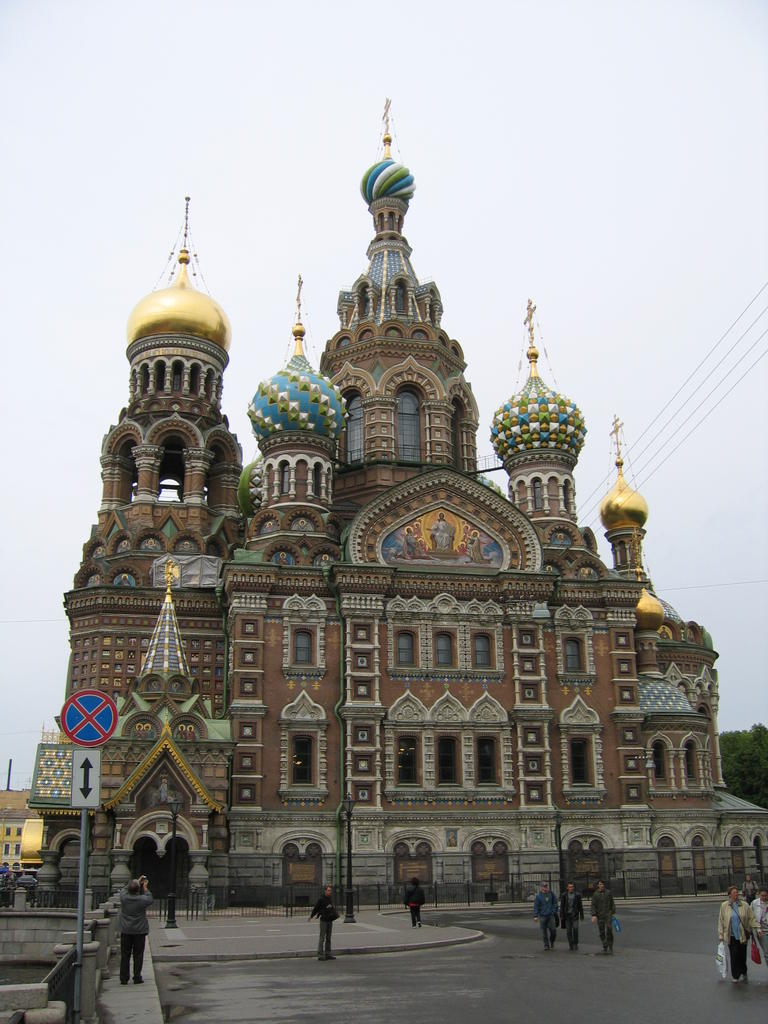 edieval architecture. Thus this church is a short of "light charm" of all that is Russian, not the "full blooded, great work of art" that Saint Basil’s is.
 Behind the church are vendors selling souvenirs and Russian Folk Art. I bought a watercolor of the Russian Museum and the Church of the Savior of the Blood. We bought the rest of our souvenirs and folkart at Izmailovsky Park, outside of Moscow. Things were generally more
 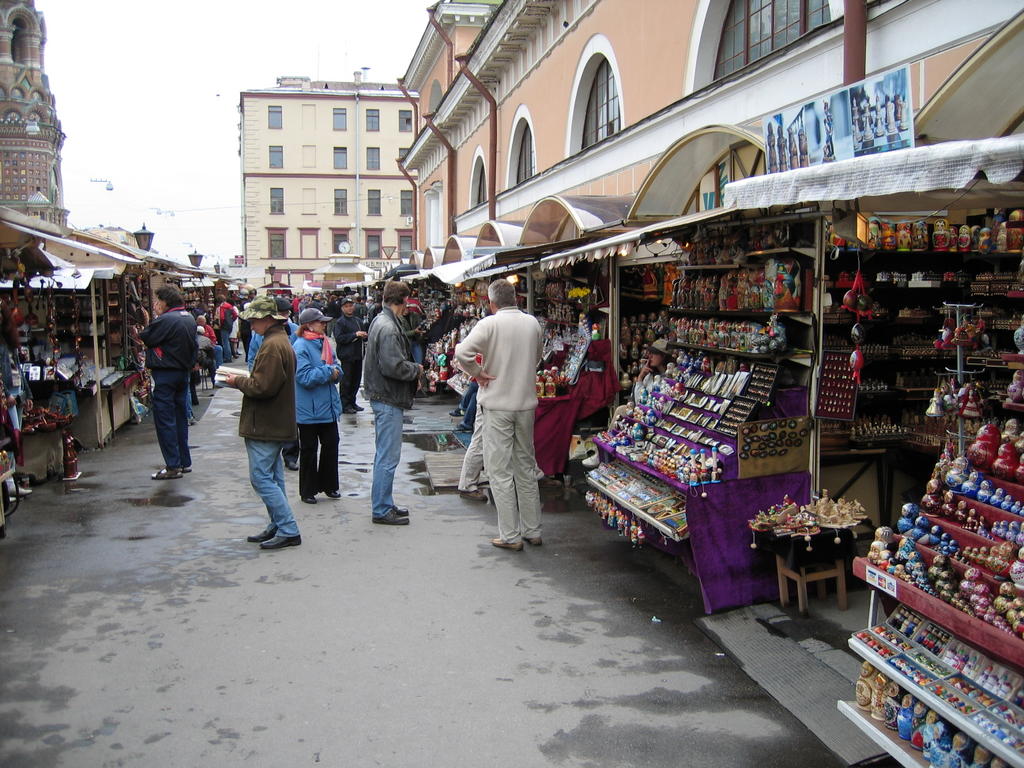 expensive here. We then went to find some dinner before we had to be at the ballet. We finally decided on a little cafe and ordered a few Russian pancakes (very similar to a French crepe--you can get all sorts of fillings from cheese to chocolate). They had some great hot stew and meat dishes on the menu but when we everyone we tried to order they said they were out of it. We did
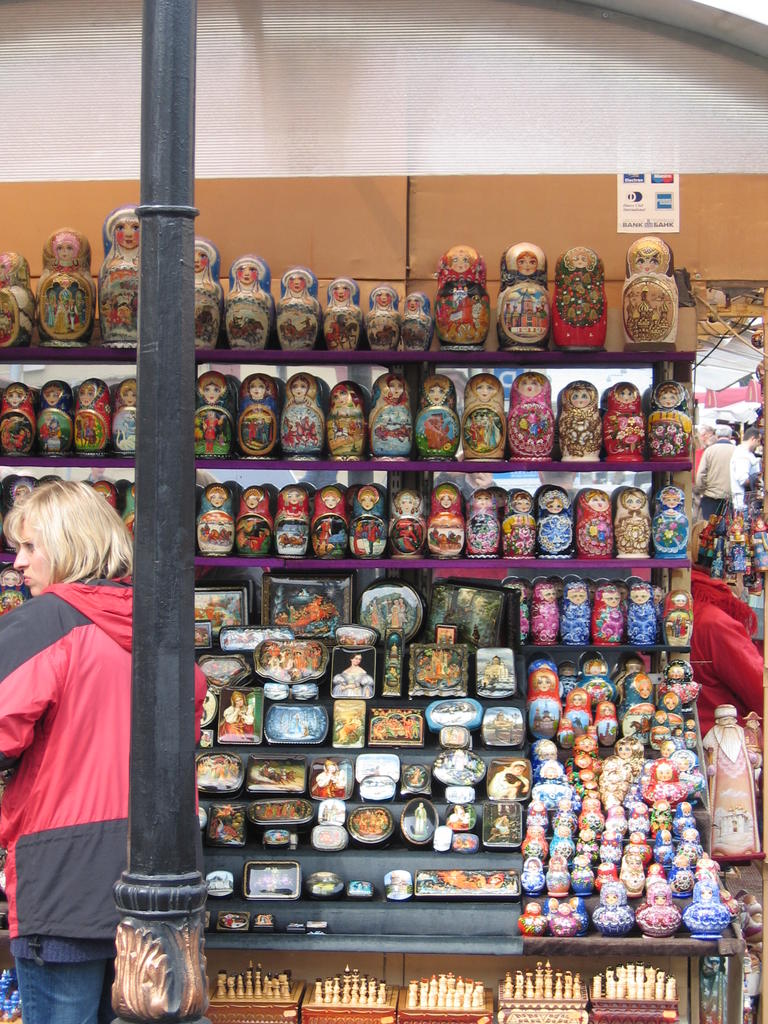 n’t have time to go anywhere else so the pancakes were going to have to do.
posted by Laurissa at 10:36 PM
3 comments